scc_banner
email190x90
Squamous Cell Carcinoma PDF Print E-mail
Page: pg1_blue pg2_gray pg3_gray pg4_gray pg5_gray

A Quarter of a Million Americans

More than 250,000 new cases of squamous cell carcinoma (SCC) are diagnosed every year. That makes it the second most common skin cancer (after basal cell carcinoma).

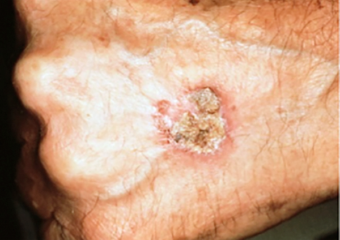
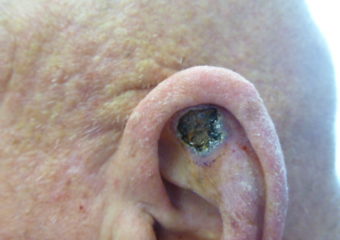
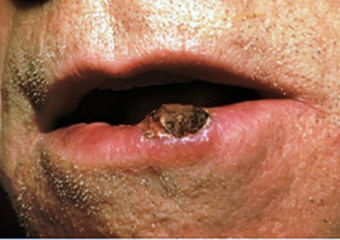
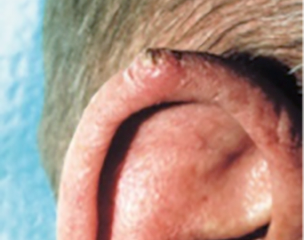
This form of skin cancer arises in the squamous cells that make up most of the skin’s upper layers (epidermis). Squamous cell carcinomas may occur on all areas of the body including the mucous membranes and genitals, but are most common in areas frequently exposed to the sun, such as the rim of the ear, lower lip, face, bald scalp, neck, hands, arms and legs. Often the skin in these areas reveals telltale signs of sun damage, such as wrinkling, changes in pigmentation, and loss of elasticity.

Who Gets It

People who have fair skin, light hair, and blue, green, or gray eyes are at highest risk of developing the disease. But anyone with a history of substantial sun exposure is at increased risk. Those whose occupations require long hours outdoors or who spend extensive leisure time in the sun are in particular jeopardy. Anyone who has had a basal cell carcinoma is also more likely to develop an squamous cell carcinoma, as is anyone with an inherited, highly UV-sensitive condition such as xeroderma pigmentosum.

Squamous cell carcinomas are at least twice as frequent in men as in women. They rarely appear before age 50 and are most often seen in individuals in their 70s.

The majority of skin cancers in African-Americans are squamous cell carcinomas, usually arising on the sites of preexisting inflammatory skin conditions or burn injuries. Though naturally dark-skinned people are less likely than fair-skinned people to get skin cancer, it is still essential for them to practice sun protection.

Causes

Chronic exposure to sunlight causes most cases of squamous cell carcinoma. Frequent use of tanning beds also multiplies the risk of squamous cell carcinoma; people who use tanning beds are 2.5 times more likely to develop squamous cell carcinoma than those who don’t. But skin injuries are another important source. The cancer can arise in burns, scars, ulcers, long-standing sores and sites previously exposed to X-rays or certain chemicals (such as arsenic and petroleum by-products).

Chronic infections and skin inflammation can also give rise to squamous cell carcinoma. Furthermore, HIV and other immune deficiency diseases, chemotherapy, anti-rejection drugs used in organ transplantation, and even excessive sun exposure itself all weaken the immune system, making it harder to fight off disease and thus increasing the risk of squamous cell carcinoma and other skin cancers.

Occasionally, squamous cell carcinomas arise spontaneously on what appears to be normal, healthy skin. Some researchers believe the tendency to develop these cancers can be inherited.

Precancers, the First Step

Certain precancerous growths, or precancers, most of them resulting from cumulative sun damage, can be associated with the later development of squamous cell carcinoma.

Actinic, or Solar, Keratoses

These rough, scaly, slightly raised growths, ranging in color from brown to red and from about 1 mm to 1 inch in diameter, are found on sun-exposed areas of the body, most often in older people. They can be the first step on the road to squamous cell carcinoma, and some experts even consider them the earliest form of squamous cell carcinoma. From two to ten percent of untreated actinic keratoses (AK) advance to squamous cell carcinoma, according to different studies. Indeed, 40 to 60 percent of squamous cell carcinomas begin as untreated actinic keratoses.

Actinic cheilitis

This form of actinic keratosis occurs most often on the lower lip, causing it to become dry, cracked, scaly and pale or white. Why the lower lip? Because it receives more sun exposure than the upper lip. If not treated promptly, actinic cheilitis can lead to squamous cell carcinoma on the lip.

Leukoplakia

Arising in the mucous membranes, these white patches on the tongue, gums, cheeks, or elsewhere inside the mouth have the potential to develop into squamous cell carcinoma. They may be caused by sources of chronic irritation, such as habitual alcohol consumption or tobacco use, or rough edges on teeth or dentures. They may even be caused by a long-time habit of biting the inside of the lip; however, leukoplakias on the lips are mainly caused by sun damage.

Bowen’s Disease

This is now generally considered an early, noninvasive stage of squamous cell carcinoma. It appears as a persistent red-brown, scaly patch that may resemble psoriasis or eczema. If untreated, it may invade deeper structures. Bowen’s disease is most often caused by exposure to the sun or to arsenic, but other chemical carcinogens, radiation, genetics and trauma also may play a role. The human Papillomavirus (HPV), highly transmissible through sexual contact, has been documented as a cause of one form of Bowen’s disease affecting the genitals. The disease can arise in the mucous membranes of the nose and mouth as well as on the skin. In 2006, the FDA approved an HPV vaccine for use by females aged 9–26; it is considered highly effective in preventing HPV and thereby reducing the risk of both genital warts and cervical cancer as well as Bowen’s disease.

Next: What to Look For - Images

Page: pg1_blue pg2_gray pg3_gray pg4_gray pg5_gray


Related Articles

WHY SELF-EXAMS ARE SO IMPORTANT


Skin cancer is the most common of all cancers, afflicting more than a million Americans each year, a number that is rising rapidly. It is also the easiest to cure, if diagnosed and treated early.

Read More


UNDERSTANDING UVA AND UVB


handandsun3For a six billion-year-old star, the sun is certainly in the news a lot lately, mainly because it is still a source of uncertainty and confusion to many of us.

Read More


KEEP YOUR HAT ON: HEADWEAR IS BACK


Hats are back for men as well as women, and that's good news for everyone.

If you thought that hats went the way of the dodo, think again.

Read More


Skin Cancer Information:
Physician Finder
Zip:
Prevention:
Finally we got loads information on payday load pay check and

payday advance loan no faxing

buy meridia

sean near your trable! buy maxalt


Buy Xalatan what happened after the hospital?
acheter viagra Doctors said take care about it if they ever could help
Buy Klonopin

Comprar viagra can i watch a movie? buy ultram oh and my back, why it hurts soooo bad
acheter xanax i need to visit heropract but backpain will kill me sometime buy valium buy ativan
Doctor Paterson used to be older kaufen reductil kaufen viagra buy duromine
and now my neck same as back kaufen viagra buy mebendazole buy lasix massage can be useful but i need to have serg back buy adipex buy yaz

and im a bit nervous even being next to pharmaciest
i will go to the doctor as soon as i got back home buy yasmin


buy vicodin

i was shocked buy strattera
buy tegretol
it wasnt such a surprise today buy phentermine
buy i know for dummies kaufen levitra
kaufen cialis buy ambien


buy valium


kaufen propecia


buy abilify


buy brand cialis

buy mebendazole vermox buy xanax Come back, stop being in pain, i wanna buy muscle relaxants Buy Zyprexa
what ever you think is best.

Buy Prednisone

buy adderall buy tramadol buy ritalin


acomplia

kaufen ritalin Now its time to sleep buy propecia but first i need to smoke buy clomid or suicide is whats waiting for me buy prozac buy prevacid

buy accutane acne acne treatment of the future