|
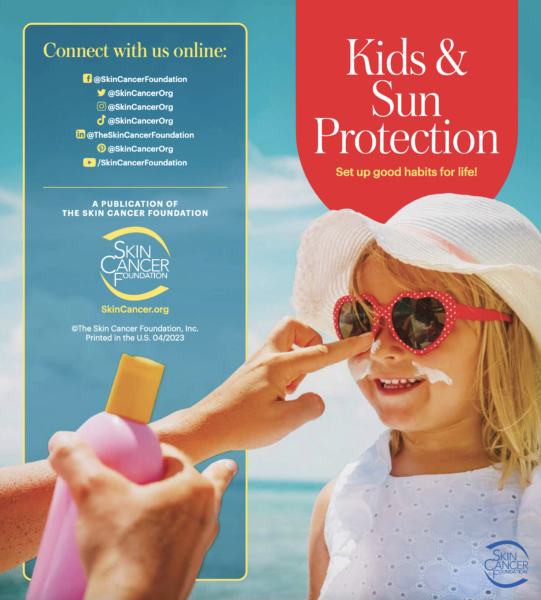
Since its inception in 1979, The Skin Cancer Foundation has always recommended using a sunscreen with an SPF 15 or higher as one important part of a complete sun protection regimen. Sunscreen alone is not enough, however. Read our full list of skin cancer prevention tips.
- Seek the shade, especially between 10 A.M. and 4 P.M.
- Do not burn.
- Avoid tanning and UV tanning booths.
- Use a sunscreen with an SPF of 15 or higher every day.
- Apply 1 ounce (2 tablespoons) of sunscreen to your entire body 30 minutes before going outside. Reapply every two hours.
- Cover up with clothing, including a broad-brimmed hat and UV-blocking sunglasses.
- Keep newborns out of the sun. Sunscreens should be used on babies over the age of six months.
- Examine your skin head-to-toe every month.
- See your physician every year for a professional skin exam.
For expanded sun safety information, check out Year Round Sun Protection.
|
|
Skin Types and At-Risk Groups |
|
|
|
Certain types of skin are at greater risk for developing sun damage and skin cancer. Do you know your skin type? Check out our photos and descriptions to find the one that best matches your skin.
|
|
Read more...
|
|
|
Sun Sensitivity — Are You at Risk? |
|
|
|
|
Sun exposure can make some people literally break out in hives. Unfortunately, many people with sun-sensitive skin don’t even realize they’re at risk. Are you one of them?
|
|
Read more...
|
|
If You Can See Sunlight, Seek the Shade |
|
|
|
|
Catherine M. Olsen, PhD Peter G. Parsons, PhD Adele C. Green, MD, PhD
While shade is a potentially valuable means of protection from the damaging effects of the sun’s ultraviolet (UV) rays, not all shade is equally protective. People can spend long hours in the shade while still receiving quite a lot of sun exposure and risking skin damage. This is because UVB rays, often considered the most harmful part of sunlight, can reach the skin indirectly.
|
|
Read more...
|
|
Year-Round Sun Protection |
|
|
|
|
The summer is not the only time you are at risk for damage from the sun. Find out how to protect yourself no matter what the season.
|
|
Read more...
|
|
|
Detecting and Preventing Eyelid Skin Cancers |
|
|
|
|
Protect Yourself from These Surprisingly Common Skin Cancers — Fashionably
Despite their small surface area, up to 10 percent of all skin cancers occur on the eyelids. While only a small number of basal cell carcinomas (BCCs), squamous cell carcinomas (SCCs), and melanomas are lethal, eyelid skin cancers can cause significant tissue damage and blindness, and can spread into the nasal and orbital cavities (the area behind the eye).
|
|
Read more...
|
Everyday steps to sun safety
Most people like to get a little sun. Its warmth and light can relax us and boost our spirits. But the benefits come with a dangerous tradeoff. Each year more than 3.5 million cases of skin cancer are diagnosed in the US, over 90 percent of which are caused by the sun’s ultraviolet rays (UVR). Similarly, most of the skin damage we associate with aging — wrinkles, sagging, leathering, and discoloration — is UVR-related. This damage is cumulative. So, whenever you venture out in the sun, be smart about it. To enjoy what the sun has to offer without risking your health, follow these simple rules:
|
|
Read more...
|
|
How To Hit the Beach Safely |
|
|
|
|
The screech of seagulls. The pounding surf. As your summer daydreams grow insistent, you grab a towel, fill up the cooler and set out for the golden sand …
Haven’t you forgotten something?
Right. Sun protection. Before a day on the beach, you need strategies to keep from returning browned or burned by harmful solar ultraviolet rays (UVR). Here’s our five-step plan to make sure your next beach trip isn’t just fun, but also sun-safe.
|
|
Read more...
|
|
|
|
|
|